The Protein Paradox: How to Rebuild Muscle After a Heart Attack Without Straining Your Kidneys
Disclosure: Some of the links below are affiliate links. This means if you click through and take action, I may receive a small commission (at no extra cost to you). This helps support the free content on this blog, while I only recommend tools and foods I truly believe in for your heart health journey.
Charles stood in front of the mirror three months after his discharge. He had followed the low-fat, low-sodium advice perfectly. He had lost 15 pounds. But when he tried to lift the grocery bags, he felt a weakness he hadn't known before.
He wasn't just losing weight; he was losing muscle.
This is the "Protein Paradox" in cardiac recovery. We are so focused on what to remove (sodium, saturated fat) that we forget what we must add to rebuild the very pump that keeps us alive.
Rebuilding muscle isn't just about aesthetics; it's a clinical necessity. The PROT-AGE Study Group recommends that older adults with acute or chronic illnesses, such as heart failure, maintain a protein intake of 1.0 to 1.5g per kg of body weight to prevent sarcopenia (muscle wasting).
However, increasing protein intake creates a metabolic tension. Clinical experts, like Dr. Jaime Uribarri, refer to this as the "Dilemma of Renal Diets"—the balancing act between meeting increased protein needs for muscle preservation and minimizing the long-term risk of Glomerular Hyperfiltration (accelerated kidney aging).
Key takeaways
The Need: Cardiac patients require 1.0 to 1.5g of protein per kg of body weight to prevent sarcopenia (muscle wasting).
The Choice: Plant-based protein is better for kidney health and LDL reduction, but Whey is superior for muscle building.
The Risk: Up to 47% of top-selling protein powders (mostly plant-based) exceed safe heavy metal limits.
The Action: Prioritize "Clean Label Project" certified powders and monitor your kidney function (eGFR).
How to Evaluate Protein Quality
Not all protein is created equal. Scientists use specific scores to measure how well the body can actually use the amino acids in a given source.
PDCAAS: The traditional standard. It measures digestibility but caps all scores at 1.0.
DIAAS: The modern "Gold Standard." It measures absorption more accurately and allows scores to exceed 1.0, revealing which proteins are truly elite.
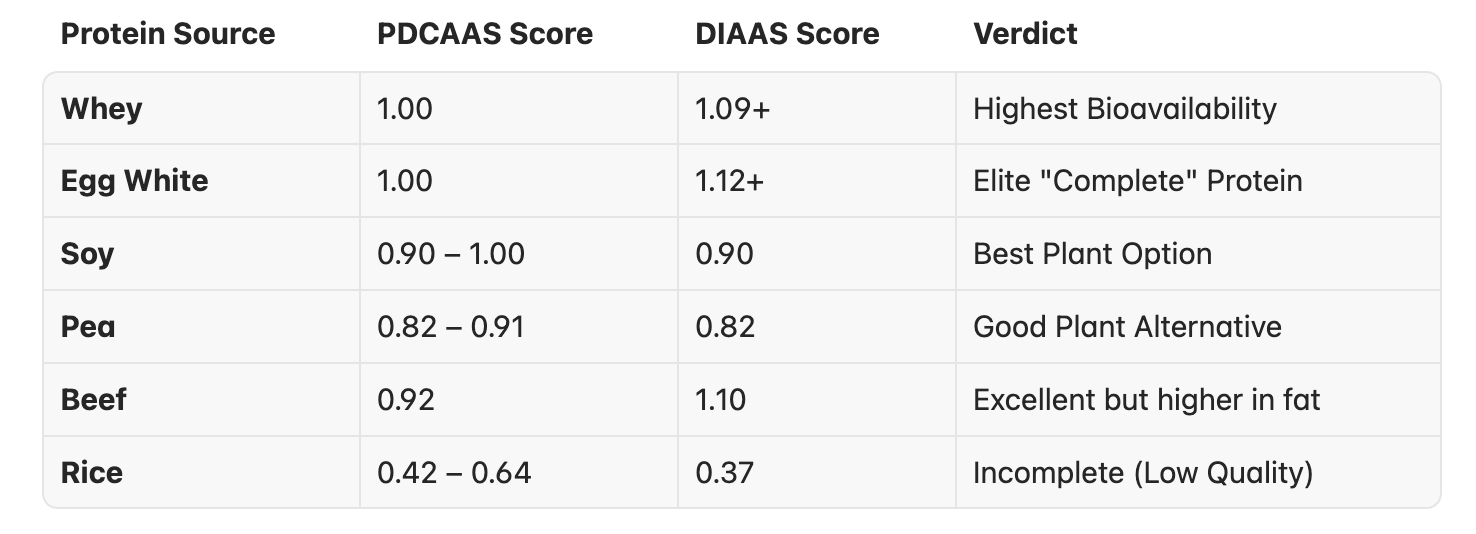
Protein Quality from different sources
Clinical Breakdown: Choosing Your Source
Whey Protein: The Muscle Builder
Whey protein is a byproduct of the cheese-making process (it's the liquid part that separates from the curd). It is a "complete" protein with the highest possible digestibility scores (PDCAAS of 1.0). It is rich in Leucine, the primary amino acid that triggers muscle synthesis. For post-AMI (heart attack) patients focused on rebuilding strength, whey is a potent tool.
Plant-Based Protein: The Heart Protector
Epidemiological evidence strongly favors plant proteins for long-term health. Substituting animal protein with plant protein is associated with reduced all-cause mortality and improved lipid profiles.
Common Plant-Based Sources:
Soy: The only plant protein with a perfect 1.0 digestibility score.
Pea: Highly digestible and hypoallergenic; best for those with lactose sensitivity.
Brown Rice: Best when paired with pea protein to create a complete amino acid profile.
Hemp: High in healthy Omega-3 fats but slightly lower in total protein concentration.
The Safety Alert: Heavy Metals in Your Shake
This is the most critical section of this guide.
The Clean Label Project analyzed 160 top-selling protein powders. They found that plant-based and organic proteins contained, on average:
3x more lead
5x more cadmium
Higher levels of mercury and arsenic
Chocolate-flavored powders were the worst offenders, likely due to heavy metals in cacao beans. If you choose a plant-based powder, it must be third-party tested.
What to Look for on the Label
When shopping, don't trust the brand's own marketing. Look for these "Gold Seals" of quality—at a minimum, ensure the product carries one of the following:
Clean Label Project (CLP): The heavy metal specialist. This is the only seal that explicitly screens for industrial and environmental contaminants like lead, cadmium, arsenic, mercury, and plasticizers (BPA/BPS) that aren't listed on regular labels.
NSF Contents Certified & Certified for Sport: The transparency standard. "Contents Certified" guarantees that what is on the label is actually in the bottle and nothing else. "Certified for Sport" adds an extra layer of screening for 280+ banned substances.
USP Verified: The performance guarantee. Beyond purity and potency, USP specifically tests for performance, meaning they scientifically prove the supplement will actually dissolve and break down in your body within the specified time, ensuring you actually absorb the nutrients.
Protein and Your Kidneys (Heart Failure Concerns)
Heart failure is often complicated by kidney dysfunction. While you need protein to combat cardiac cachexia, evidence published in Nutrients shows that unmonitored high-protein diets can increase intraglomerular pressure and cause glomerular hyperfiltration, which may stress and accelerate the decline of kidney function.
For those with moderate kidney dysfunction, plant proteins offer a "renoprotective" effect—slowing the decline of your eGFR compared to animal proteins.
The Potassium Caution: Many plant proteins (especially pea and hemp) and some whey concentrates can be high in potassium. If you are in Stage 3-5 CKD or taking blood pressure meds like ACE inhibitors or Spironolactone, unmonitored potassium intake can lead to hyperkalemia (dangerously high blood levels).
Always consult a Registered Dietitian (RD) to determine your specific potassium budget and find "kidney-friendly" supplements that won't strain your filtration system.
Label Red Flags: What to Avoid
Sodium: Some meal replacements contain hidden sodium used for texture and flavor. Look for added sodium by reading the nutrition facts panel. Ensure your supplement doesn't consume more than 10-15% of your daily sodium budget.
Added Sugars: Limit to 25g/day for women and 36g/day for men. Sugar drives triglycerides and inflammation. The World Health Organization (WHO) strongly recommends limiting free sugars to less than 10% of total energy intake (about 50g), with additional health benefits found at less than 5% (25g) per day.
Vitamin K: If you are on blood thinners like Warfarin, check for Vitamin K fortification, which can interfere with your medication's efficacy.
Dietitian Vetted Recommendations
Based on Clean Label Project data, PDCAAS scores, and third-party verification, here are the safest options for cardiac recovery, categorized by need:
1. High-Performance Powders (Best for Muscle Synthesis)
Elite absorption and high Leucine content for rebuilding strength.
Puori PW1 Bourbon Vanilla Whey: Consistently ranked as the "Cleanest Whey" by the Clean Label Project.
Ascent Native Fuel Whey Protein: Minimal ingredients, zero artificial sweeteners, and NSF Certified for Sport.
Optimum Nutrition Gold Standard 100% Whey: The industry standard for mixability and protein-per-dollar, trusted for decades.
2. Clean Plant-Based Options (Best for Kidney Health)
Lower heavy metal profiles and renoprotective fiber.
Garden of Life Raw Organic Protein: Sprouted plant protein with consistent third-party testing for purity.
Ritual Essential Protein (Postpartum/Daily): Traceable ingredients and rigorously tested for heavy metals.
Isopure Zero Carb (Unflavored): A "clean slate" option that is keto-friendly and easy on the digestion.
3. Ready-to-Drink Shakes (Zero Friction)
For days when you can't reach for the blender.
Orgain Clean Protein Shake: A popular choice for those prioritizing organic ingredients and a cleaner label than traditional medical shakes.
Ensure Max Protein Shake: Contains 30g of protein and low sugar, specifically designed to help rebuild muscle and prevent breakdown.
Renal-Friendly Choices
Kate Farms 1.8 Renal Support (20g Pro): Specialized dialysis nutrition support, but can also be recommended if you have issue with high potassium level and/or high phosphorus level.
Nestle Novasource Renal Formula: Nutritionally complete kidney friendly formula.
Nepro Nutrition Shake (19g Pro): For people with compromised kidney function and with fluid restrictions.
Diabetic-friendly Choices
Kate Farms 1.2 Glucose Support (16g Pro): Organic meal replacement for glucose control.
Glucerna Original Diabetes Care Shake: Diabetic meal replacement for blood sugar management.
BOOST Glucose Control Drink: Extra nutrient support for glucose control.
4. Focused Enhancing Supplements
Targeted tools for specific recovery goals.
Vital Proteins Collagen Peptides: For joint support and connective tissue repair—crucial if you're increasing your activity levels.
Thorne Creatine Monohydrate: (NSF Certified for Sport). Recommended for heart failure patients to support cellular energy production in the heart muscle.
HMB (Calcium β-Hydroxy β-Methylbutyrate): HMB is a metabolite of the amino acid Leucine. While Leucine starts muscle building, HMB is elite at stopping muscle breakdown.
Optimum Nutrition Instantized BCAA: Trusted recovery support to reduce post-workout soreness.
I blend my morning shake in a Vitamix 5200. It allows you to use whole foods (like cashews and flax) to cream your shakes without relying on chemical thickeners or extra salt.
Action Step: The Protein Math
Calculated your target: [Weight in kg] x 1.2 = Daily Grams of Protein.
Example: An 80kg (176lb) person needs 96g of protein per day. If you aren't hitting that through whole foods, a clean supplement is your insurance policy.
Reference Links
The NOURISH Trial: Specialized Nutrition and Mortality Reduction
Ko et al., 2020: The Effects of High-Protein Diets on Kidney Health and Longevity (Nutrients)
Hertzler et al., 2020: Plant Proteins and Kidney Function (Nutrients)
Appendix: Master Protein Product Index
All links include my affiliate tag. I only list products that have either been Clean-Label tested or hold reputable third-party certifications.
The "Clean 16" Winners (Clean Label Project Certified)
Puori PW1 Whey Protein (Bourbon Vanilla)(Clean Label Project Purity Award)
Puori Whey Protein with Collagen(Clean Label Project Purity Award)
WICKED Protein Clear Whey Isolate(Clean Label Project Certified)
Ora Organic Plant-Based Protein(Third-party tested for purity)
Therapeutic Shakes (Clinical Support)
Premium & NSF Certified Options
NAKED Whey Grass Fed(Single ingredient, NSF Certified)
Levels Grass Fed Whey Protein(No artificials)
THORNE Whey Protein Isolate(NSF Certified for Sport)
NOW Foods Whey Isolate(NSF Certified)