
The Complete Guide to Menopause Cardiac Risks and High Blood Pressure
The Complete Guide to Menopause Cardiac Risks and High Blood Pressure
Written by: Lian Liu, MPH, RD, CDCES | Specializing in Cardiac & Menopause Nutrition. Reviewed and updated: June, 2026.
> Direct Answer: Menopause and high blood pressure are strongly linked because the loss of estrogen causes accelerated arterial stiffness, an increase in visceral fat, and higher LDL cholesterol levels. Protecting your heart requires requesting advanced lipid panels, increasing your dietary potassium-to-sodium ratio, eating more soluble fiber, and strength training to build metabolic resilience.
Key Takeaways
- The estrogen drop is a mechanical issue: As estrogen declines, your arteries lose nitric oxide, becoming stiffer and directly increasing blood pressure within a year of your final period.
- Change your salt strategy: Instead of just cutting sodium to lower blood pressure, actively add potassium-rich foods (like beans and spinach) to help your arteries open up and relax.
- Request advanced labs: A standard cholesterol panel isn't enough; ask your doctor for an ApoB and Lp(a) test to accurately measure the actual number of plaque-causing particles in your blood.
Many women are blindsided when their doctor tells them they have high blood pressure for the first time in their early 50s. If you are navigating menopause and high blood pressure, you are not alone—and it is not just stress or "white coat syndrome." The menopausal transition acts as a biological accelerant for cardiometabolic risk, turning what was once considered a "man's disease" into the leading cause of death for women. This guide will show you exactly why this happens and give you the actionable, evidence-based steps to protect your cardiovascular future.
The Biological Reality: Why Heart Risk Spikes at Menopause
Quick Answer: The sudden drop in estrogen alters how your body handles lipids and causes blood vessels to constrict, leading to the "menopause cholesterol spike" and the accumulation of inflammatory visceral belly fat.
During your reproductive years, estrogen serves as a powerful cardioprotective hormone that keeps your blood vessels flexible and helps suppress "bad" cholesterol. As estrogen production permanently declines, your body undergoes severe systemic shifts:
- Accelerated Arterial Stiffness: The loss of estrogen decreases nitric oxide bioavailability, causing blood vessels to constrict and lose elasticity. Research shows that arterial stiffness accelerates most sharply within just one year of the final menstrual period.
- The "Menopause Cholesterol Spike": The decline in estrogen alters how your liver handles lipids. In the 12-month window directly bracketing your final menstrual period, LDL-C, Total Cholesterol, and Apolipoprotein B (ApoB) rise steeply. If you're looking for dietary ways to address this, read more about 3 Foods to Lower LDL in Menopause.
- Visceral Fat Accumulation: Hormonal changes redirect fat storage deep into the abdominal cavity. This visceral fat is highly inflammatory and directly drives insulin resistance, higher triglycerides, and a worsening cardiovascular risk profile.
- Vasomotor Symptoms as a Warning: Severe and frequent hot flashes and night sweats are not just uncomfortable; they are clinically linked to an elevated risk for cardiovascular disease, greater visceral fat gain, and higher incidence of stroke.
High Blood Pressure: The Silent Threat
Quick Answer: High blood pressure during menopause is driven by arterial stiffness and insulin resistance, not just salt intake. Active management is critical to prevent atherosclerosis and stroke.
Ignoring high blood pressure allows for the silent progression of atherosclerosis (plaque buildup), raising the risk of heart failure and stroke. High blood pressure is not just a result of eating too much salt. It is a mechanical and hormonal problem driven by endothelial injury (damage to the arterial lining), arterial stiffness, and insulin resistance. To protect your heart, you should actively target a blood pressure of less than 120/80 mmHg.
Essential Lab Markers to Request
Quick Answer: A standard annual physical often misses the true severity of menopausal cardiac risk. You need to advocate for advanced markers like ApoB, Lp(a), and hs-CRP to see the full picture.
| Lab Marker | What It Measures | Standard Normal Range | Why It Matters for Menopause |
|---|---|---|---|
| ApoB | The exact number of plaque-causing particles. | < 90 mg/dL (optimal < 60 mg/dL for high risk) | More accurate than LDL-C, especially if you have insulin resistance. |
| Lp(a) | A genetic lipid particle risk factor. | < 30 mg/dL (or < 75 nmol/L) | High levels (≥50 mg/dL) increase cardiovascular risk by ~40%. |
| hs-CRP | Systemic vascular inflammation. | < 1.0 mg/L (lower risk) | Levels ≥2 mg/L act as a clinical "risk enhancer." |
| HOMA-IR | Hidden insulin resistance. | < 1.5 (optimal) | Detects insulin resistance before prediabetes develops. |
For a deeper dive on how to speak with your doctor about these tests, check out our Advanced Lipid Testing Advocacy Guide.
Cardiac Nutrition Strategies
Quick Answer: You cannot out-exercise a diet that promotes inflammation. Emphasize a Mediterranean or DASH approach, focusing on protein pacing, optimizing your potassium-to-sodium ratio, and increasing dietary fiber.
- Optimize Your Sodium-to-Potassium Ratio: To lower blood pressure, do not just blindly cut salt. Focus on adding potassium-rich foods (like spinach, avocados, and beans) to your diet. Consuming more potassium than sodium helps your arteries vasodilate (open up), improving vascular tone and blood flow.
- Focus on "Protein Pacing": Menopausal bodies lose muscle mass rapidly, which slows the metabolism and worsens insulin resistance. Aim for 1.2 to 1.6 grams of protein per kilogram of body weight daily (roughly 30 grams per meal). Adequate protein stabilizes blood sugar and ensures weight loss comes from fat, not your heart-protecting muscle.
- Swap Saturated Fats for Unsaturated Fats: Because your LDL naturally rises during menopause, limiting saturated fats (found in fatty meats and butter) and completely avoiding trans fats is critical. Replace them with monounsaturated and polyunsaturated fats like extra-virgin olive oil and avocados to actively lower your LDL and triglyceride levels.
- Increase Omega-3s and Dietary Fiber: Aim for at least 25 grams of fiber daily. Fiber acts like a broom in your digestive tract, sweeping out excess cholesterol. Incorporate Omega-3 fatty acids from wild-caught salmon and flax seeds to powerfully combat systemic inflammation.
Actionable Lifestyle Tips
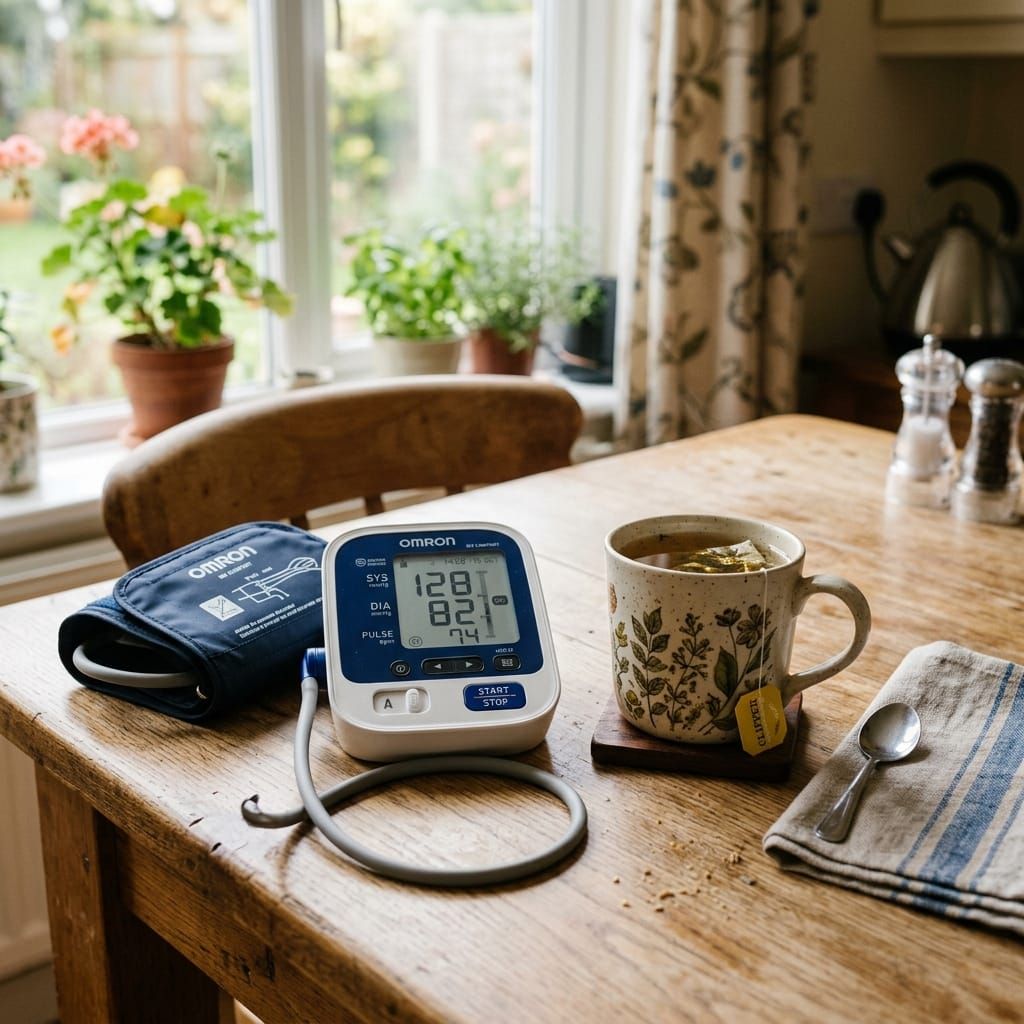
- Track Your Blood Pressure at Home: Buy an automatic blood pressure cuff from the pharmacy. Monitor it periodically at home to establish a true trend, avoiding the anxiety spikes of the doctor's office.
- Prioritize Strength Training: While steady-state cardio targets visceral belly fat, resistance training (lifting weights) builds your "metabolic engine." Muscle soaks up glucose from your bloodstream, directly combating insulin resistance.
- Discuss MHT with Your Doctor: Research surrounding the "Timing Hypothesis" demonstrates that if Menopausal Hormone Therapy (MHT) is initiated within 10 years of your final menstrual period and before age 60, it has profound cardioprotective effects. It can help prevent arterial stiffening and reduce visceral fat. MHT requires a thorough, individualized evaluation.
Related Reading: Continue your recovery journey with our guide on How to Stay Heart-Healthy at Parties and Holiday Gatherings.
Summary
Navigating menopause and high blood pressure doesn't have to be a source of anxiety. By tracking the right advanced lab markers, adopting an additive nutrition strategy, and leveraging both strength training and targeted medical care, you can take full control of your cardiovascular future. Taking proactive steps today builds the metabolic resilience you need for the decades ahead. If you need a reliable way to monitor your progress at home, I highly recommend the Withings BPM Connect, which accurately tracks and syncs your daily readings.
To make taking action easier, download our Free Resource Library today—it includes a heart-healthy Grocery List designed specifically to help you optimize your potassium-to-sodium ratio and manage your blood pressure.
Stay Ahead of Your Heart Health
Want to stay up-to-date with current science-backed nutrition tips to protect your cardiovascular future?
- Subscribe to the Newsletter: Get practical, clinical-strength tips on diet, labs, and lifestyle adjustments sent straight to your inbox.
- Get the Master Course: Secure immediate access to the Heart Disease Risk Reversal Master Course and start reversing your risk today. 👉 Join the Newsletter & Master Course here
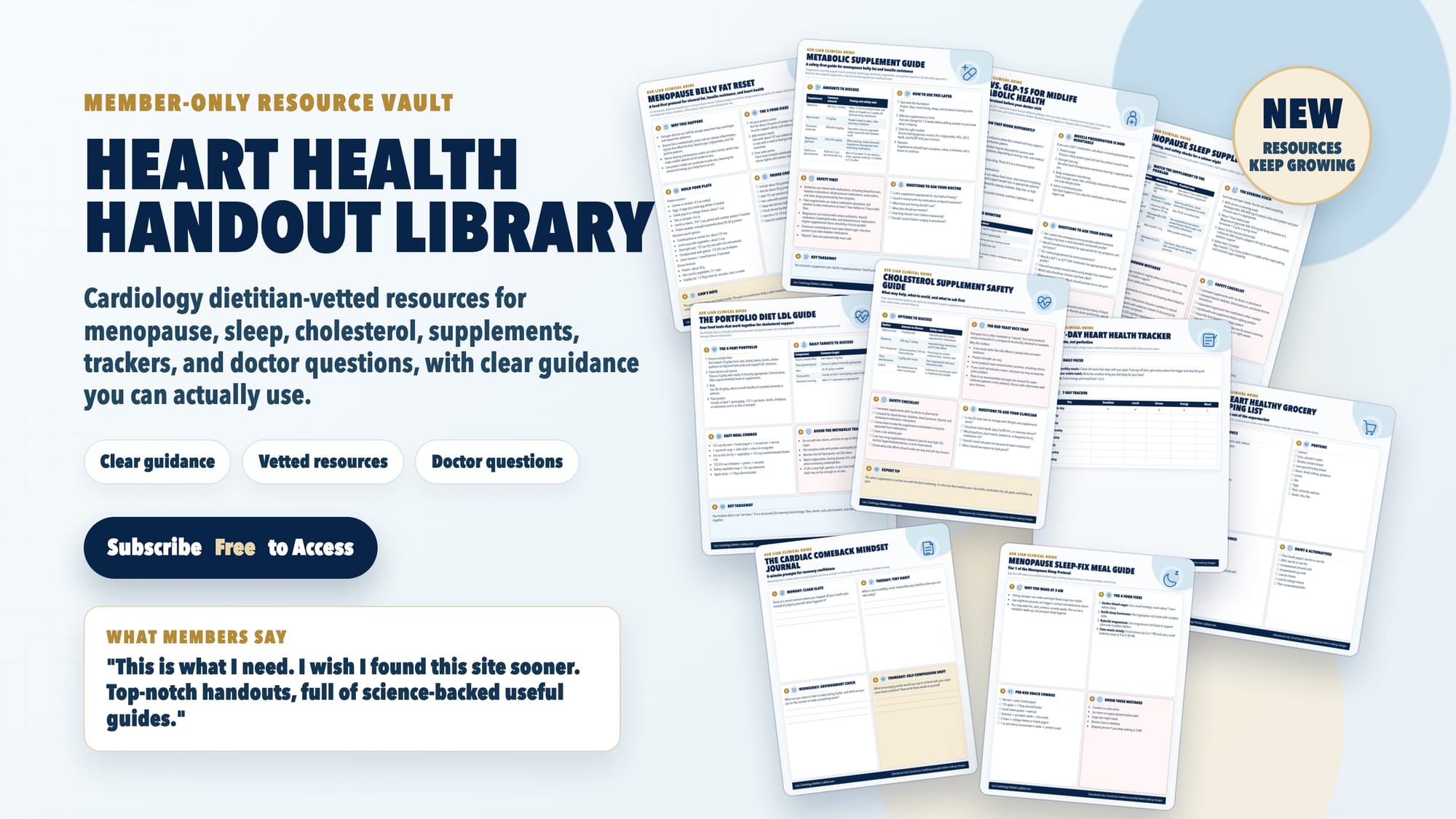
Download Vetted Clinical Handouts & Trackers
Get instant access to a growing library of evidence-based guides, food protocols, and symptom logs vetted by a cardiology dietitian. Access is completely free—simply subscribe to view.
Access Handout Library



Member discussion